Am I Letting Go or Am I Giving Up

As we grow older, reflection becomes inevitable. We may begin to ask ourselves: Have I done enough? Is there more I should be striving for, or is it time to be content? Have I climbed all the mountains I was meant to climb, or should I still be chasing new summits?

Lately, I’ve found myself confronting a vision I once had for this phase of life — a vision that may no longer be realistic. Accepting that is difficult for someone like me, whose philosophy has always been that many things in life are difficult, but few are impossible. I’ve always believed that with enough determination, any goal could be achieved. When something starts to feel out of reach, letting go can feel like I’m giving up.

But is that really the case?

We’ve all seen people in leadership roles hold on long past their time. Staying too long can diminish the impact of their legacy. Letting go, in these cases, could have been a wiser and more dignified decision.

And it’s not just about careers. How many of us have held on to relationships, roles, or dreams long after they stopped serving us? Sometimes, we persist in situations that are clearly no longer working because walking away feels like failure.

We often create a vision of how life should be. But life has a way of shifting — through unexpected challenges, changing priorities, or simply time. When that vision no longer aligns with our reality, we face a difficult choice: Do we keep striving toward what might no longer be possible, or do we accept a new version of life?

Is acceptance the same as surrender? Is letting go a sign of wisdom — or a sign of giving up?

Understanding the difference between the two is key. Here’s how I’ve come to define them:

  • Letting Go is a conscious, intentional decision made after reflection and clarity. It’s about releasing attachments, beliefs, or situations that no longer serve your well-being, to make space for new possibilities. It can bring peace, relief, and a renewed sense of purpose.
  • Giving Up is often reactive. It’s driven by discouragement, fear, self-doubt, or external pressure. It involves abandoning effort and can leave us feeling powerless or regretful, reinforcing a sense of failure.

The difference lies in the motivation behind the choice — and the impact it has on your well-being.

Ask yourself:

  • Does holding on bring you hope, joy, and inspiration?
  • Or does it feel heavy, frustrating, and burdensome?
  • Are you driven by passion — or by fear?

Letting go isn’t weakness. It isn’t quitting. It’s choosing to stop pouring your energy into what no longer brings you joy. It’s choosing peace over struggle, clarity over confusion. Most importantly, it’s choosing to trust that releasing something doesn’t mean you’re left with nothing — it just means you’re making room for something new.

The process of accepting life as it is — rather than as you once imagined it — does not mean you’ve been defeated. Acceptance allows us to find gratitude for what we do have instead of despair over what we’ve lost or were never able to achieve.

Ultimately, whether you decide to let go or to hold on, do it with intention. Understand why you’re making the choice. Evaluate the cost to your mental, emotional, and physical health. And be honest about what you’re fighting for — or what you’re fighting against.

Every decision we make shapes our future. So, choose with clarity. Choose with courage. And above all, choose what honors your growth

The Love of a Pet: A Valentine’s Day Tribute to Our Furry Companions

While Valentine’s Day is often associated with romantic love, there’s another kind of love that deserves celebrating—one that is loyal, pure, and unwavering: the love between humans and their pets.

Whether it’s a devoted dog’s wagging tail or a contented cat’s gentle purr, pets offer us companionship, joy, and an unconditional bond that enriches our lives every day. Pets are more than just animals; they are family, friends, and our most loyal confidants. 

Two years ago, in a moment of insanity and a feeling that it was now or never, my husband and I decided to get a dog. Our reasoning, based on denial, was that if we didn’t get one now, we would be too old to take care of one. What we soon learned, however, was that we were already too old.

We fell in love with a six-week-old golden retriever we named Jackie and took her home to live with us. We soon found ourselves wondering how such a tiny bundle of joy could create such delightful chaos.

My standards for a clean house fell quickly. Shredded puppy pads became part of the décor, and protecting our socks and shoes became our new way of life.

We learned to identify people in our neighborhood who were “dog people” and to avoid those who weren’t. The Dog Park became our social life, and Jackie soon became its queen. Before running off to play with the dogs, she would greet each dog’s parents with friendliness, which always resulted in a belly rub or pat on the head. Our challenge was chasing Jackie around the park when we were ready to go home because she was never ready.

I began reading about dogs’ developmental stages, so I would know what to expect next and be reassured that our current stage wouldn’t last forever. 

We attended puppy training classes that Jackie thought were play time but made us feel like failures as parents. In her first four-week training class, she barked from the beginning to the end of every session while the other dogs sat quietly beside their parents. I’m sure the teacher gave her a passing grade to get rid of her.

We’ve survived 25 months with Jackie, and oh, the joy she has brought us. We can be gone for 30 minutes, and she will greet us as if we have been gone for 30 days. She always gives us something to laugh about, and her love is unconditional. She sits between us on the sofa at night while we’re watching TV and alternates whose face she will lick next.  Woe to you if you sneeze in her presence. All seventy pounds of her will be in your lap with her nose in your face, ensuring you’re ok.

One of the most remarkable aspects of the human-pet relationship is the unwavering loyalty and affection it provides. Unlike human relationships, which can be complex and sometimes unpredictable, pets love without judgment or condition. They are always there to greet us after a long day, comfort us when we’re feeling down, and celebrate with us in our happiest moments.

Beyond the emotional joy pets bring, they also contribute significantly to our well-being. Studies have shown that pet ownership can reduce stress, lower blood pressure, and even improve heart health. Petting an animal releases oxytocin, a hormone associated with bonding and happiness, while also decreasing levels of cortisol, the stress hormone.

For those who suffer from anxiety or depression, pets provide a sense of purpose and routine. They encourage physical activity—whether it’s taking a dog for a walk or playing with a cat—which can boost mental health. Their presence can alleviate feelings of loneliness, providing comfort and companionship in times of need.

To experience the love of a pet, you must also be prepared to accept its loss. I’m told that the pain of losing a pet softens over time, leaving behind a bittersweet reminder of the joy they brought. The loss of my 20-year-old cat, Jasmine, is too recent for me to know for sure.

I adopted Jasmine when she was just a few months old. She was an adventuresome cat I often rescued from the trees beside my balcony. We frequently flew coast to coast together when my consulting business required me to live in other locations for a year or so. Taking an adventuresome cat through airport security is not easy. No matter where I was and what was happening in my life, Jasmine was always there with me. I miss her every day.

Though our pet may no longer be physically by our side, the love we shared endures. Memories of their playfulness and loving companionship are engraved in our hearts as a testament to an unbreakable connection that forever enriches our souls.  

Valentine’s Day is about expressing love; our pets do this every day without words. Their loyalty, companionship, and affection remind us of the beauty of simple, unconditional love. This Valentine’s Day, let’s cherish the love our pets give us so freely—because, in their eyes, every day is a celebration of love.

Let them know how much they mean to you, whether it’s an extra treat, a longer walk, or quiet cuddle time. And if you don’t have a pet, consider rescuing one—somewhere, a pet waiting for you who needs your love, and maybe you need theirs. 

  1.  

Wake Up Rip Van Winkle

There are moments when I feel like Rip Van Winkle waking up from a long winter’s nap and questioning if COVID really happened or was it only a bad dream?

How could something come along so quickly that threatened our lives and livelihood, caused us to question if we would ever feel safe again, force us to make changes we didn’t choose, and then appear to leave us just as quickly?

Is it true that one minute I was on a cruise ship sailing around Australia, and the next I was scrambling to jump on the last flight out as Australia completely closed down and praying to get home before all US flights were grounded?

Did my husband and I really not go out of our house for months only to contact COVID from our four-year-old granddaughter and survive, when so many our age didn’t?

Continue reading “Wake Up Rip Van Winkle”

Living With The Question Mark

I brought a journal with me thinking I would write down my thoughts and insights about my future as I’m making this 128-day voyage around the world.  I drew a question mark – a big one  – on the first page to indicate that the next decade of my life is somewhat undefined.

In his new book  “When,” Daniel Pink defines“9-enders,” as people in the last year of a life decade who experience a desire to evaluate their life, how they feel about what they have and haven’t accomplished, and how they want to experience life in the next decade. I, like many of my clients, fall into to the category of “9-enders.”

I’ve always had a vision of what my life would be like “next, ”but never really had a plan for how that would happen. I just had faith that my vision would become my reality and the details of “how” would take care of themselves, and they did. The question mark was never about what I wanted but instead about how I would achieve it.

I’m 64 days into the cruise and that question mark is all I’ve written in my journal. However, I’m beginning to think the question mark was an accurate indicator of my future because, not only do I not know where I’m going next with my life, I don’t know where this cruise ship is going next. The Corona Virus is wreaking havoc with our itinerary.

Continue reading “Living With The Question Mark”

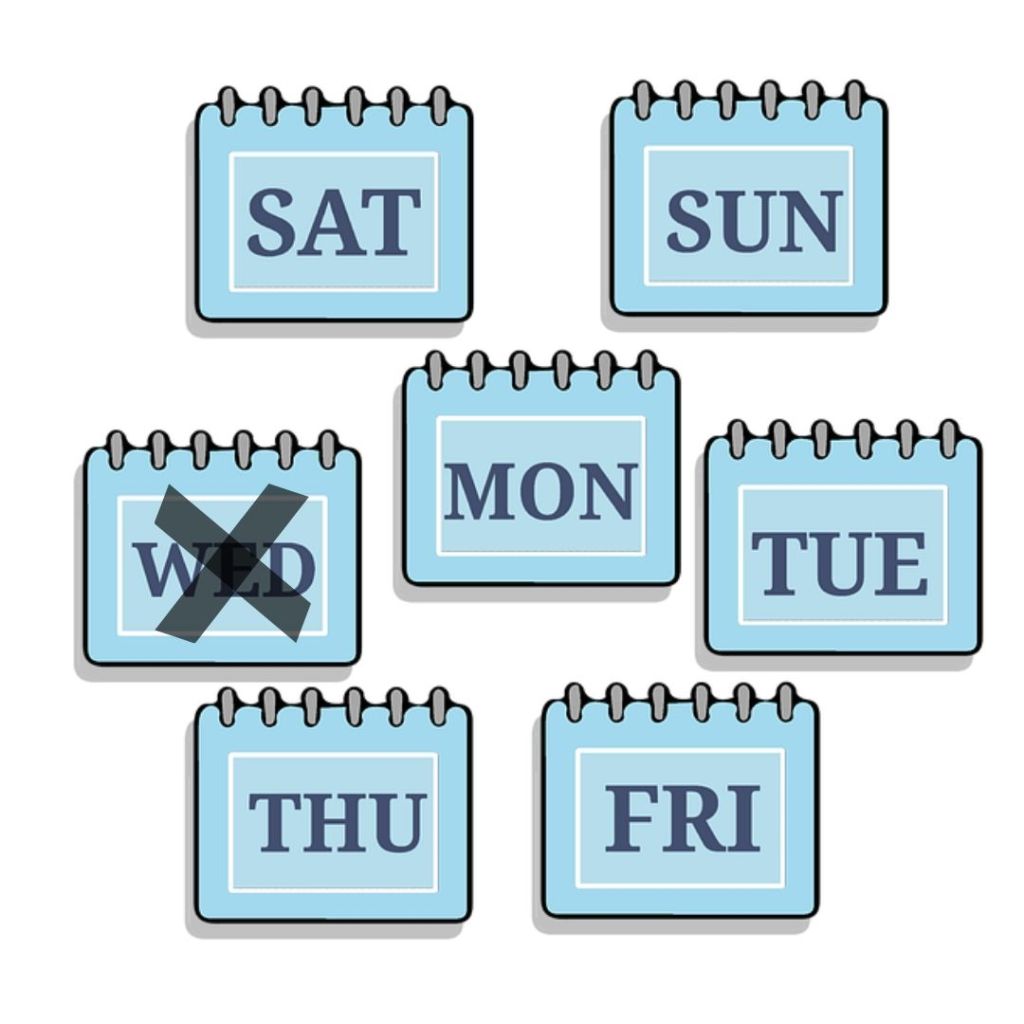
A Week Without A Wednesday

I came on a cruise to see new places and have new experiences, and this week didn’t disappoint. I was stung by a bee on a beach in Tahiti, learned our itinerary is changing due to the Corona Virus, and lost Wednesday.

I came on a cruise to see new places and have new experiences, and this week didn’t disappoint. I was stung by a bee on a beach in Tahiti, learned our itinerary is changing due to the Corona Virus, and lost Wednesday.

I went to sleep Tuesday night, February 25th and woke up on Thursday morning, February 27th.  No, I didn’t sleep through Wednesday because Wednesday, February 26th didn’t exist on our cruise ship this week.  We crossed the international date line on our way to New Zealand and Wednesday, February 26th  disappeared.

On Tuesday the captain reminded us to advance our clock 23 hours. This sounds like a big change, and it is the loss of a day, but if I think about it in a different way, I realize it’s only a one-hour change to my day-to-day schedule.  It’s the same process we follow every Autumn in the US when we set the clocks back one hour and have an earlier sunrise and sunset.

Continue reading “A Week Without A Wednesday”

The Impact Of Culture On Your Life

Not everyone thinks like Americans and shares our belief that we should aspire for more and more and more and never give up until we’ve gone as far as we can go. Hard work brings success and success brings happiness. I’m learning that some cultures are happy just being happy. Who’s right?

If you never travel beyond your zip code, you may never question your beliefs or realize how the culture you grew up in, or currently live in, affects the choices you see for yourself, decisions you make and the life you live.  

Culture consists of a set of beliefs that form the foundation and create the rules and “shoulds” that govern our life. We seldom question if these beliefs are true and will often impose our beliefs on others, judge them wrong for not accepting them as truth, and/or only surround ourselves with people who share our beliefs to reinforce that we are “right.”

I grew up with beliefs that I didn’t question until I started traveling and began to see that the definition of right or wrong – especially for women – was influenced by what was defined as acceptable behavior where you lived. This awareness facilitated major changes in my own life that included moving far away from my original zip code and stimulated an interest in understanding the impact of cultural on our lives.

One of the many things I’m enjoying about cruising is the opportunity to learn about different cultures, not only from the different countries I visit but also from the culturally diverse staff who are usually with us for the entire four months.

One morning last week my coffee was delivered by a young Balinese man I hadn’t met before.  I asked if he was new to the ship and he replied that he had just gotten on in Santiago and then added, “and my dream has come true.”

I didn’t think his dream was delivering my coffee each morning, so I asked him to tell me more about what he meant.  He said that as a child growing up in Bali, he had seen the large cruise ships and dreamed of one day working on one and traveling around the world. He went to hoteling school and had landed his dream job.

Thinking like an American and a career coach,  I mentioned that his education would likely make it possible from him to advance to management. He replied that he had been doing the same job for seven years and had no desire to move up.  He had realized his dream and didn’t aspire for more.

Not everyone thinks like Americans and shares our belief that we should aspire for more and more and more and never give up until we’ve gone as far as we can go. Hard work brings success and success brings happiness. I’m learning that some cultures are happy just being happy.  Who’s right?

The cruise ship does a wonderful job of providing lectures about the culture of the places we’re visiting that’s reinforced by the local guide on the tours I take. These aren’t “chamber-of-commerce” talks that present the city as ideal,  but honest portraits of life in those cities.

In January I visited Brazil, Uruguay, Argentina and Chili, and learned about the South American culture  and differences from country to country between the rich and poor. I realized that there are individuals who aspire for a better life but will have a difficult – if not impossible – task of achieving their aspirations because of the culture they were born into and lack of resources to support them in achieving their dreams – or even dreaming them in the first place. I’m currently cruising in the South Pacific and learning about the Polynesian culture.

I visited Easter Island where 887 ancient human faced Moai statues believed to be built around 300 AD still stand. We were instructed by the local tour guide to not walk too close to or touch the statues because they respected their ancestors who were buried in the ground in front of the statues and they didn’t want them walked on. They believe the spirits of the ancestors reside in the statues.

We were also asked to not take a rock as a souvenir because rocks contain spirits that are meant to remain where they were formed, just like people, and you would have bad luck if you took one home with you.  I saw no reason to take the risk and won’t be having any rock souvenirs from Easter Island.

We couldn’t get off the ship at Pitcairn Island but anchored and brought Pitcairn residents on board to sell their products and deliver a presentation about their culture, which was immortalized in the file, Mutiny on the Bounty. There are 40 residents on the island from 9 families who are descendants of the survivors and instigators of the mutiny. There are only two women in the child-bearing age so they’re giving land to anyone who will move there. If you’re looking for an isolated lush island surrounded by beautiful blue water, this is for you. If you’re a young woman who can still have children, the British government is looking for you.

The Pitcairn and Easter Island belief about never leaving where you were born reminded me of the traditional southern culture I grew up in where no one moved very far away from family. You were supposed to “bloom where you were planted.” When I was growing up my parents lived on the same street as my mother’s parents and one street over from my dad’s parents. They later moved all the way across town, changing the last number of their zip code and upsetting the grandparents.

The southern culture may be to bloom where you’re planted but Cook Island in French Polynesia takes it a step further. It’s common practice to bury family in your front yard and when I was touring, I saw gravesites and tombstones in front of homes.

The Polynesian culture experts believed that the biggest threat to preserving their culture happened when the Christian missionaries came to Polynesia to “save” the natives by replacing their “wrong” belief of many gods with the “right” belief in one God. Of course the intent of the missionaries was good, just like my intent to provide encouraging career advice to my Balinese room service attendant and assume he would share the American belief that you must advance, that basically judges the Balinese belief as “wrong.”

The common theme I recognize across the different cultures is the impact family and religion have on our belief of what’s right and what’s wrong; but, more importantly how we allow those beliefs to dictate what our life will be rather than questioning if they’re true for us and understanding that what’s right for us may not align with the beliefs of our culture.

I think instead of automatically believing a choice is right or wrong because that’s what you’ve been told or what’s acceptable in your family, take a moment to ask yourself if you’re making the decision that’s the best decision for you, reflects your values, and puts you on the path to living the life you want to live.

Something to think about.

Getting Older Is Getting Younger

Maybe it’s because I’m getting older, but it seems to me that what was once considered old age is no longer old. It’s not just that people are looking younger than past generations have at their age, from what I’m observing, they’re also acting younger.

A motivating factor for going on this cruise was a belief that I’ve moved into a decade of life that is classified as “old,”  and should go while I’m still physically able to enjoy traveling.  But meeting so many people who are several years older than I am is rapidly changing my belief about age-imposed limits.

One of the cruise ship’s doctors was seated at my dinner table last week and mentioned that the average age of passengers onboard is 83.  I knew that the oldest passenger is 98, but I didn’t realize that the average age was over 80. I look around me and I observe people who clearly aren’t young, but who don’t act old – or at least aren’t behaving in a way we once believed appropriate for a person over a certain age.

There are a small number of people on the ship who use canes, walkers, scooters, or are in wheelchairs, but they’re still going on a cruise around the world. They aren’t sitting at home in front of the TV thinking about the life they once had or could have if they were younger and healthier.  They’re going places despite the physical limitations of getting older. Think about how many wheelchairs you see in airports these days.

Of course, cruising does attract an older demographic because it is less physically demanding than other forms of travel, but it still requires a lot of walking to get to different areas of the ship and go on tours when we are in port. When we’re at sea I average walking two miles a day just going from place to place onboard in addition to the two miles I walk around the ship as daily exercise. And then there’s all the dancing on the ship. Someone’s always dancing somewhere. There are dance lessons during the day and dancing in two locations every night. I look at the people who are dancing and they aren’t young, but they’re still walking and dancing on a ship that is often rolling from side to side or up and down.

I realize that my fellow passengers may not be representative demographics of the larger over 80 population.  They have the financial means to eat healthily, engage in activities that support mental stimulation, and connect with people who are active instead of living in isolation as many seniors do. And yes, there are grumpy old people onboard who never smile and will be miserable anywhere they go, just as you can find people in their 20’s and 30’s who are prematurely grumpy.  Who wants to model them?

We’ve learned from multiple studies that key factors contributing to a long healthy life are relationships, exercise, and diet; but I’m observing the behaviors, attitude, and mindset described below in my fellow passengers that I believe contribute as well.

1.       Talk more about the future more than the past. The future my fellow passengers often talk about is their next cruise, but the point is that they have something to look forward to. People who talk more about the past than the future typically can’t envision a future that is as enjoyable than their past and can develop the belief that there is nothing to look forward to. Their best years are behind them.

2.       Focus on what you want to experience instead of what you believe you must accomplish.  If you’re old enough to be classified as old you’ve probably already accomplished enough for a lifetime, plus it sounds like work. Instead, think about how you want to experience life at this stage of your life. I seldom hear anyone on the ship talk about the career or profession they’ve retired from, but they do talk about the experiences they want to have.  

3.       Engage with people who are active and share your outlook on life. It’s easy to become isolated when you don’t have a job to go to every day that also provides an outlet to build relationships with others who have similar interests. You must make an effort to find religious, charitable, political, and educational organizations that provide the structure to form relationships that your job once did.  The attitude and behavior of people you spend time with can limit or expand your view of what’s possible for you at any age.  If your friends sit around and complain, you’re likely to as well. Not fun.

We can’t stop the aging process but there are steps we can take to turn getting older into feeling younger, even with a few aches and pains.

Something to think about.

Life Lessons From The End Of The World

Getting away from it all sounds appealing when you’re rushing through life checking items off your “To Do” list and thinking you could have done each one of them a little better. How would it feel to be in a place that is calm, serene, silent, disconnected from the outside world, and where no one knows you well enough to ask anything of you?

I had the opportunity to find out last week as my cruise ship spent 7 days at sea between Buenos Aires and Ushuaia, Argentina – also known as the city at the end of the world.

Our scheduled stop in the Falkland Islands was cancelled due to bad weather. This added an extra two days to the already scheduled five days at sea to cruise around King George’s Island, Admiralty Bay, Paradise Bay, and Charlotte Bay in Antarctica; and to be completely disconnected from the world outside the ship.

Antarctica is virtually untouched by humans. Cruising is the only way to visit unless you’re on an expedition team.  For five days I felt like I was floating in an ethereal silent world of silver and white where it’s almost impossible to tell where the snow ends, and the water and sky begin. The only sound from my balcony was the crackling of the ice, similar to what you hear when you pour liquid over ice cubes. And this time of year, it doesn’t get dark at night, it just gets gray. Virtual daylight but little sunshine 24×7.

There was a constant parade of icebergs of all shapes and sizes and large chunks of glacier ice passing in front of my balcony. The glacier ice is underlit by a neon blue light caused by the amount of ice visible under water. It looks man-made but is natural, God-made, and truly beautiful. It’s almost hypnotic to watch it all.

The cruise ship was the only vessel on the water, and other than an occasional spotting of whales, colonies of Penguins and an Albatross flying by, we were completely alone. Even though I was accompanied by 1300 people on the cruise, when I was standing on my balcony surrounded by snow, water, and sky, I felt completely alone.

Antarctica is a place people go to be unreachable. Internet connections were impossible, phone calls extremely difficult, and we had no TV reception on days when there was a lot going on. In this world of constant connection and news 24 x 7, what’s a person to do when you can’t connect?  How do you get through the day without knowing what’s going on in the world? What do you do when no one needs you to do anything?

Not being able to connect with the outside world made me feel uncomfortable. I found myself checking my phone to see if it was working and trying to log on to the internet much too frequently.  I was surrounded by beauty and yet I just didn’t seem to be able to let go of the need to connect, even though there was no urgent reason why I needed to.  I think constantly checking our phone for messages is another one of those habits we develop without fully understanding why. It’s difficult to stop even though you say that you really want to get away from it all.

I finally realized I was wasting too much time trying to fix something that wasn’t fixable. Wouldn’t it be better to stop resisting reality and enjoy where I was? After all, I was in Antarctica and heading to Ushuaia, the city known as the end of the world, and likely won’t come this way again. Wouldn’t it be better to fully experience the world I was in and enjoy the present moment?

The lesson I took away from this experience was to stop doing what clearly isn’t working. Relaxing and accepting reality of the moment is a much better choice than fighting the impossible. How many times do we continue to but our head against the wall of something we don’t like but can’t change?

The feeling of being cut off and unable to communicate didn’t feel good, but it wasn’t within my power to fix. Continuing to try only increased my frustration and prevented me from enjoying the beauty of the moment.

To simply stop doing what clearly isn’t working may sound too simple but often what sounds simple isn’t easy to do.  

Something to think about.