A Week Without A Wednesday

I came on a cruise to see new places and have new experiences, and this week didn’t disappoint. I was stung by a bee on a beach in Tahiti, learned our itinerary is changing due to the Corona Virus, and lost Wednesday.

I came on a cruise to see new places and have new experiences, and this week didn’t disappoint. I was stung by a bee on a beach in Tahiti, learned our itinerary is changing due to the Corona Virus, and lost Wednesday.

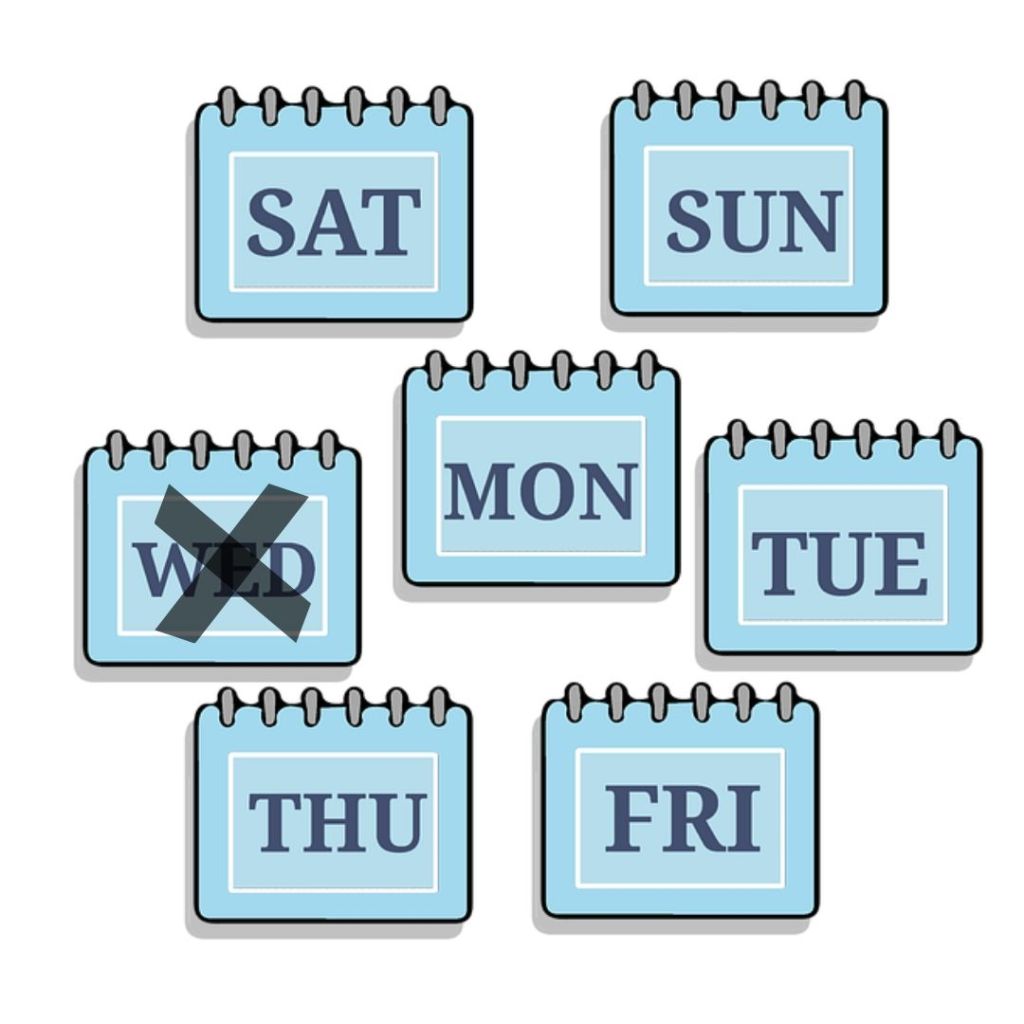
I went to sleep Tuesday night, February 25th and woke up on Thursday morning, February 27th.  No, I didn’t sleep through Wednesday because Wednesday, February 26th didn’t exist on our cruise ship this week.  We crossed the international date line on our way to New Zealand and Wednesday, February 26th  disappeared.

On Tuesday the captain reminded us to advance our clock 23 hours. This sounds like a big change, and it is the loss of a day, but if I think about it in a different way, I realize it’s only a one-hour change to my day-to-day schedule.  It’s the same process we follow every Autumn in the US when we set the clocks back one hour and have an earlier sunrise and sunset.

Continue reading “A Week Without A Wednesday”

Getting Older Is Getting Younger

Maybe it’s because I’m getting older, but it seems to me that what was once considered old age is no longer old. It’s not just that people are looking younger than past generations have at their age, from what I’m observing, they’re also acting younger.

A motivating factor for going on this cruise was a belief that I’ve moved into a decade of life that is classified as “old,”  and should go while I’m still physically able to enjoy traveling.  But meeting so many people who are several years older than I am is rapidly changing my belief about age-imposed limits.

One of the cruise ship’s doctors was seated at my dinner table last week and mentioned that the average age of passengers onboard is 83.  I knew that the oldest passenger is 98, but I didn’t realize that the average age was over 80. I look around me and I observe people who clearly aren’t young, but who don’t act old – or at least aren’t behaving in a way we once believed appropriate for a person over a certain age.

There are a small number of people on the ship who use canes, walkers, scooters, or are in wheelchairs, but they’re still going on a cruise around the world. They aren’t sitting at home in front of the TV thinking about the life they once had or could have if they were younger and healthier.  They’re going places despite the physical limitations of getting older. Think about how many wheelchairs you see in airports these days.

Of course, cruising does attract an older demographic because it is less physically demanding than other forms of travel, but it still requires a lot of walking to get to different areas of the ship and go on tours when we are in port. When we’re at sea I average walking two miles a day just going from place to place onboard in addition to the two miles I walk around the ship as daily exercise. And then there’s all the dancing on the ship. Someone’s always dancing somewhere. There are dance lessons during the day and dancing in two locations every night. I look at the people who are dancing and they aren’t young, but they’re still walking and dancing on a ship that is often rolling from side to side or up and down.

I realize that my fellow passengers may not be representative demographics of the larger over 80 population.  They have the financial means to eat healthily, engage in activities that support mental stimulation, and connect with people who are active instead of living in isolation as many seniors do. And yes, there are grumpy old people onboard who never smile and will be miserable anywhere they go, just as you can find people in their 20’s and 30’s who are prematurely grumpy.  Who wants to model them?

We’ve learned from multiple studies that key factors contributing to a long healthy life are relationships, exercise, and diet; but I’m observing the behaviors, attitude, and mindset described below in my fellow passengers that I believe contribute as well.

1.       Talk more about the future more than the past. The future my fellow passengers often talk about is their next cruise, but the point is that they have something to look forward to. People who talk more about the past than the future typically can’t envision a future that is as enjoyable than their past and can develop the belief that there is nothing to look forward to. Their best years are behind them.

2.       Focus on what you want to experience instead of what you believe you must accomplish.  If you’re old enough to be classified as old you’ve probably already accomplished enough for a lifetime, plus it sounds like work. Instead, think about how you want to experience life at this stage of your life. I seldom hear anyone on the ship talk about the career or profession they’ve retired from, but they do talk about the experiences they want to have.  

3.       Engage with people who are active and share your outlook on life. It’s easy to become isolated when you don’t have a job to go to every day that also provides an outlet to build relationships with others who have similar interests. You must make an effort to find religious, charitable, political, and educational organizations that provide the structure to form relationships that your job once did.  The attitude and behavior of people you spend time with can limit or expand your view of what’s possible for you at any age.  If your friends sit around and complain, you’re likely to as well. Not fun.

We can’t stop the aging process but there are steps we can take to turn getting older into feeling younger, even with a few aches and pains.

Something to think about.

Mastering The Art Of Doing Nothing

If you’re feeling overwhelmed by work or play, try pausing and asking yourself these two questions. It could be the first step to making life more enjoyable and less stressful.

My vision of what life would be like on a four-month cruise included not making a bed, doing laundry, or cooking; visiting amazing places around the world; relaxing on my balcony with coffee delivered by room service every morning and a glass of wine at sunset; and, sitting by the pool with a book in one hand and a Pina Colada in the other on the days we were at sea. It would be the first time in my life when I could completely relax and enjoy doing nothing after 35+ years of a pretty demanding career with only an occasional one-or two-week vacation. The thought that transitioning to doing nothing might be difficult, never entered my mind.  

I’m beginning the fifth week of my 18-week cruise, and I must confess that I’ve flunked doing nothing.

The cruise began with four days at sea, plenty of time to learn my way around the ship, visit the spa, fitness center, beauty salon, shops, two swimming pools, movie theater, dining room, casino, library, and have a drink at each of the 7 bars. Every night we receive a schedule of the next day’s activities that include a minimum of four options for every hour from 9 am until 7:30 pm. Live entertainment begins at 7:30 pm and continues until 11 pm. Then, there’s dancing at a couple of the bars that goes past midnight. I wanted to do it all, because it sounded like fun and I didn’t know how to do nothing.

After four days of going nonstop from sunrise to midnight, I realized I was tired, and we hadn’t even made the first stop on our itinerary. What am I doing, I asked myself, didn’t I come on this cruise to relax and visit wonderful places around the world?  It’s great that there are so many activities offered on the ship the days we are at sea, but I don’t have to participate in all of them. I didn’t come on the cruise to learn to line dance or do arts and crafts, and It really is ok to relax, do nothing, and save my energy to explore the wonderful places I came on the cruise to see.

Since leaving Ft. Lauderdale on January 4th, we’ve stopped in Dominica; St Lucia; Belem, Recife, and Rio de Janeiro, Brazil; Uruguay; and, Buenos Aires, Argentina. My favorite so far is Uruguay with Buenos Aires a close second. I believe Uruguay is a hidden gem most Americans don’t think about visiting. Antarctica and Chile are next on the itinerary and then we head over to New Zealand and Australia at the end of February. There’s plenty to see and do when I’m exploring places I haven’t been before and then relax and do nothing, other than decide what to eat and what to wear when we are at sea. So, that’s what I’ve decided to do.

I’m beginning to feel more comfortable just relaxing. My days at sea begin with coffee on my balcony and a 2 mile walk around the ship. After that, I just go with the flow. I don’t feel the need to keep busy every hour, which is a change for me. Before the cruise I was always thinking about what I had to do or must do and somedays feeling overwhelmed and unable to get it all done. Even though life on a four-month cruise is very different, I came on the cruise and repeated that same “must do everything” behavior that felt natural to me.

Changing behavior is always a challenge, and the transition to a new behavior feels strange. To keep me focused on the desired behavior I’m asking, “do I really have to do this, do I really want to do this?”  Often the answer is no, and I’m free to relax. If you’re feeling overwhelmed by work or play, try pausing and asking yourself the same two questions. It could be the first step to making life more enjoyable and less stressful.

Will this new behavior last? Will I be able to master the art of doing nothing? Or, will I find that doing nothing is overrated and strike a balance between doing too much and not enough? I have three months left to find out. 

Around The World With Rita

My philosophy for many years had been to make decisions based on faith and not on fear. I begin to question if that was how I was living my life. #yourchangeguru

If not now, when?

Why am I doing this?  Isn’t this financially irresponsible?  After all, I’m not getting any younger.

It’s December 26, 2017 and I’m in the ER waiting for the doctor to tell me I can go home, take Tylenol, drink plenty of fluids and I’ll be fine. What I hear instead is “you could be dead in 3 days. You have liver failure, pneumonia, and there’s a spot on your lung that’s consistent with Lung Cancer.”  Since my reaction to bad news is typically to argue against it, I looked at the doctor and said: “You must have my medical records mixed up with someone else’s. I’ve never had liver problems or smoked, and I’m sure I have the flu. Young doctor looked at me, shook his head and said, “we’re admitting you.”

It would be two months before the pneumonia cleared up enough for a scan to show that the spot on my lung was a granuloma and not Lung Cancer; and, for my liver numbers to get back to normal and confirm the problem with my liver was caused from taking too much Tylenol in too short a period from a combination of flu, cold, cough, and pain medicine. I now know too much Tylenol can kill you.

Two months is a long time to try your best not to imagine the worst. It’s also long enough to think about how you want to experience the future, if you have one.

I thought about choices I had made about how to live my life until that time in my life. My philosophy for many years had been to make decisions based on faith and not on fear. I begin to question if that was how I was living my life.

The moment I realized the ER doctor was talking about me and that I could be dead in 3 days, the thought that popped into my head was “I should have spent my money.” I had worked hard to save and make financially responsible choices because I was afraid of not having enough money to live on in my old, old, age.  Now, I began to realize I might not have an old, old, age. “I could have taken a trip around the world with some of that money, I thought, now I never will.”

Fast forward 2 years into the future and here I am – cruising around the world for the next 4 months. Was the decision to do this a mistake? Will I run out of money in my old, old age? Maybe. All I know for sure is that while I’m living, I’m going to live. I will not let fear of what might happen keep me from exploring what could happen.

That’s how I want to experience life at this stage of my life, and that’s my answer to the question “why?”

What about you?  How do you want to experience life at this stage of your life?

Something to think about.